A Parent’s Guide to Finding the Right Home on the Upper West Side
For many Upper West Side families, the home search isn’t just about square footage or light. It’s about school zoning, we have two school age children so we know it too well ourselves.
If you’re buying in District 3, you’re not just purchasing real estate — you’re making a long-term decision about your child’s education, community, and daily life.
Morgan and I have worked with many families on the Upper West Side for over the last twenty years. We have seen firsthand how different buying looks when school zoning becomes the priority. Here’s what parents should really know before starting the process.
Understanding District 3 on the Upper West Side
School District 3 covers much of the Upper West Side and includes several highly sought-after public elementary schools, including (not all are mentioned here):
- P.S. 199 Jessie Isador Straus
- P.S. 87
- P.S. 9
- P.S. 166 The Richard Rodgers School of the Arts and Technology
- The Anderson School
Each school has its own culture and strengths. Some families prioritize academic rigor. Others look for a play-based or community feel. Some parents are navigating gifted & talented (G&T) admissions, while others are focused on zoned placement. Although New York Public School systems are lottery based, understanding the basis will be very helpful and useful.
Before even looking at apartments, I always recommend parents:
- Confirm current zoning boundaries.
- Understand admissions timelines.
- Learn how kindergarten placement works in that specific year.
School zoning can shift, and policies do change. We currently have Mayor Zohran Mamdani has appointed Kamar Samuels as the city’s school chancellor, many school decisions are to be determined so we want to keep that in mind. Real estate decisions should be made with current information — not assumptions based on what worked five years ago.
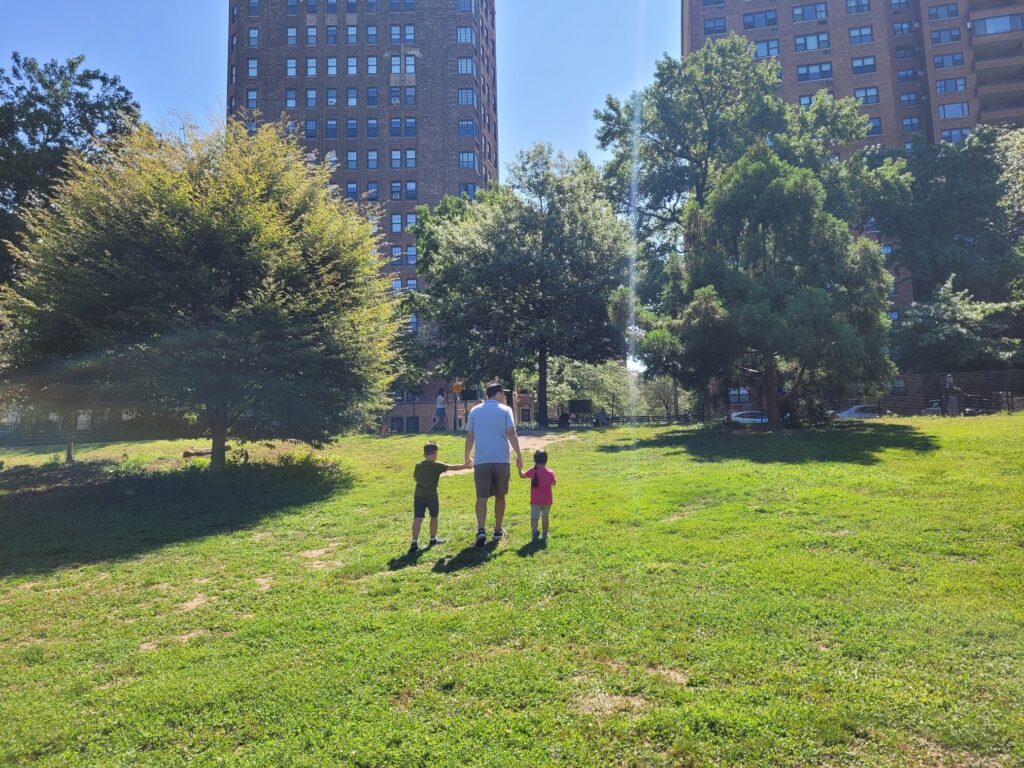
Morgan with two kids at Riverside Park near West 76th Street in the Summer Time
Buying for Kindergarten: Timing Matters More Than You Think
A common mistake I see is families starting the search too late.
If your child will enter kindergarten in September, you ideally want to close on the property well before application deadlines and have proof of residence established.
In co-op buildings especially, the timeline can stretch longer than expected:
- Offer acceptance
- Board package preparation
- Board review
- Interview
- Approval
- Closing
It’s not unusual for this to take 60–90 days (sometimes longer). If you need financing, the timeline can vary and will play a big factor here.
Like many of our past clients, if school placement is critical, your purchase timeline should be built backwards from the application deadline.
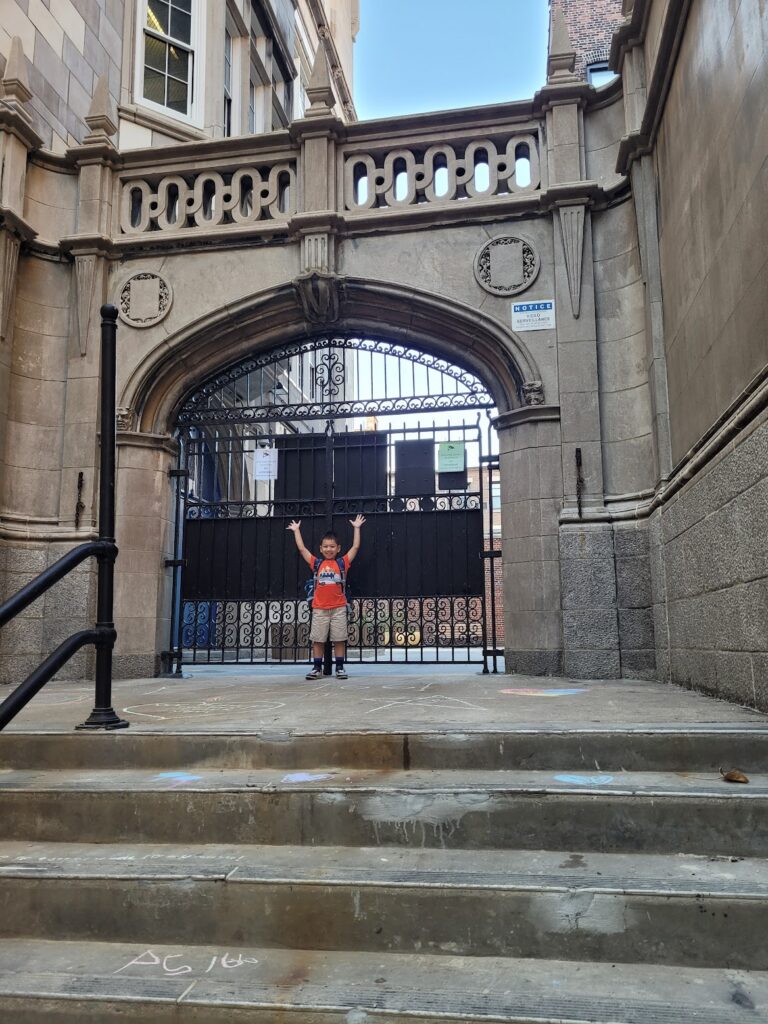
Co-op Realities: What Families Need to Prepare For
The Upper West Side is heavily co-op-driven. That means buying in School District 3 often means going through a board approval process.
Parents sometimes underestimate how financial these boards are.
Most New York city co-op boards in this area look closely at:
- Debt-to-income ratio
- Post-closing liquidity
- Stable employment history
- Low overall debt
If grandparents are gifting funds, documentation must be clean and organized. If income is variable (bonus-based, self-employed, international income), preparation becomes even more important.
For many Chinese-speaking families purchasing for their children’s education, this process can feel unfamiliar. 合作公寓董事会审批 (co-op board approval) is not like buying property in many other countries. The financial review is detailed and personal.
The key is planning early — and structuring your offer properly — makes all the difference, we can talk through the timeline with you so there is a clear strategy.
Not All Buildings Feel the Same
Two apartments zoned for the same school can feel completely different in lifestyle.
Each Upper West Side building has its own personality. Some have a lively, family-oriented feel, while others offer a more peaceful environment with many long-term homeowners.
If you have young children, we like to look at:
- Is there storage for scooters or strollers?
- Is the elevator reliable during peak school hours?
- Are there other children in the building?
- How responsive is management?
Many times, community matters just as much as location.
For example, buildings like Dorchester Towers, for example, have long histories, established boards, and predictable financial structures — which can provide stability for families planning long-term. Other buildings may allow higher financing but have higher monthly maintenance.
There’s no one-size-fits-all answer. It depends on what works for your family.

Budgeting Beyond Purchase Price
Buyers often focus heavily on purchase price and forget monthly carrying costs.
Maintenance fees in Upper West Side co-ops can vary significantly based on:
- Building age
- Staff size
- Underlying mortgage
- Recent capital improvements
When buying for school access, it’s important to look beyond today’s numbers. Children grow, needs change, and what works financially now should still make sense a few years down the road.
Buying at the top of your comfort level can create stress later — especially if one parent reduces work hours or unexpected costs arise.
The Anderson School: A Different Path
Families considering The Anderson School (a City-Wide Gift and Talented School that is lottery based) should understand that admission is not purely zoned. It’s based on eligibility and placement criteria that can vary by year.
I’ve seen buyers assume that purchasing nearby guarantees entry — that’s not how it works.
If your strategy involves applying to Anderson while also wanting a strong zoned backup like P.S. 199 Jessie Isador Straus, your apartment choice may look slightly different.
Having a layered plan reduces stress.
The Emotional Side of Buying for School
This part is rarely talked about.
Buying for your child’s education carries more pressure than a typical purchase. Parents feel urgency. They feel responsibility. Sometimes they feel competition.
In District 3 especially, apartments that are well-priced and well-located move quickly.
The key is preparation, not panic.
Families who succeed typically:
- Get pre-approved early
- Review co-op financial expectations before making offers
- Understand comparable sales
- Move decisively when the right unit appears
When you are financially and mentally prepared, decisions feel clearer.
A Note for International and Chinese-Speaking Families
Many Chinese families choose the Upper West Side specifically for public school access. 购买学区房 is often the primary motivation.
If funds are coming from abroad or from family members, documentation and timing must be handled carefully. Co-op boards expect transparency and clear paper trails.
Having someone who understands both the local co-op culture and the expectations of international families can simplify the process significantly.
纽约上西区家庭购房指南 is not just about location — it’s about strategy.
Long-Term Thinking is the Plan
If you’re buying in District 3, think beyond kindergarten.
- Will the apartment work for middle school years?
- Can it accommodate homework space?
- Is there room if your family grows?
Many families who bought small two-bedrooms eventually trade up. Planning for resale potential matters just as much as planning for school access.
Upper West Side co-ops tend to reward long-term ownership, especially in well-run buildings with stable financials.
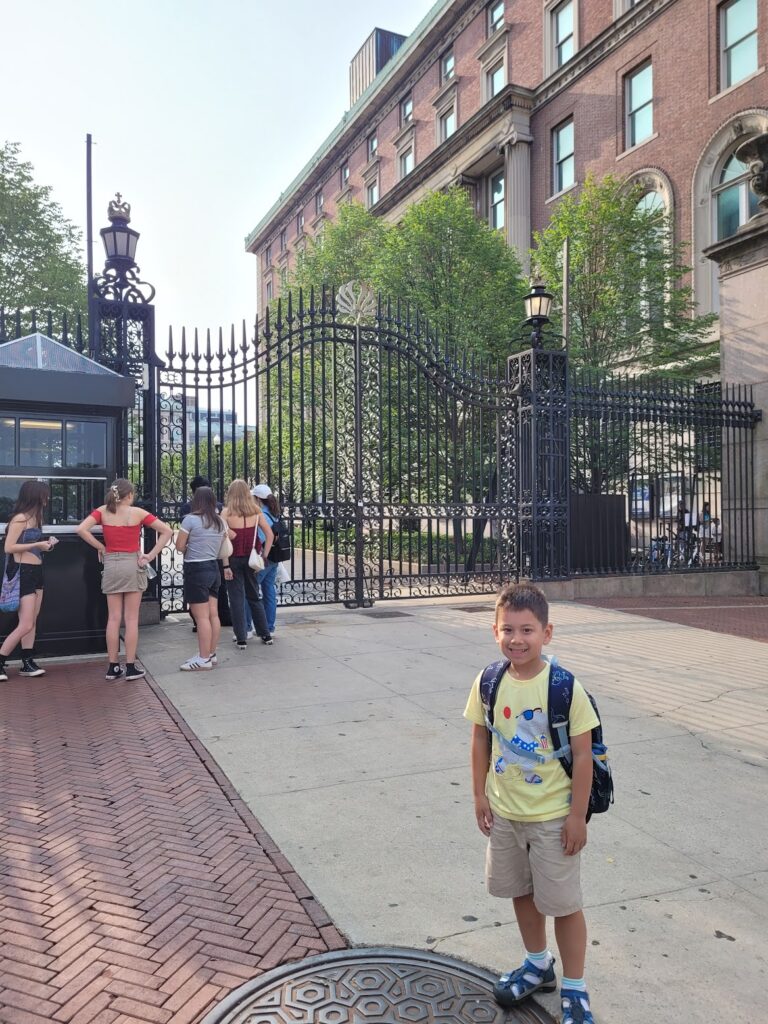
Maverick at the Columbia University gate for his weekend class
Final Thoughts
Buying in District 3 isn’t just a real estate transaction — it’s a family decision tied to education, stability, and future planning.
The most successful purchases I see aren’t rushed. They’re strategic.
When families understand:
- The co-op process
- School timelines
- Financial expectations
- Building differences
They make confident decisions.
If you’re considering buying on the Upper West Side for school access, start with clarity — not urgency. The right apartment is one that supports both your child’s education and your family’s long-term financial comfort.
Give us a call (917)837-8869 or drop us an email today – preparation always wins over pressure.